Garbage In, Garbage Out
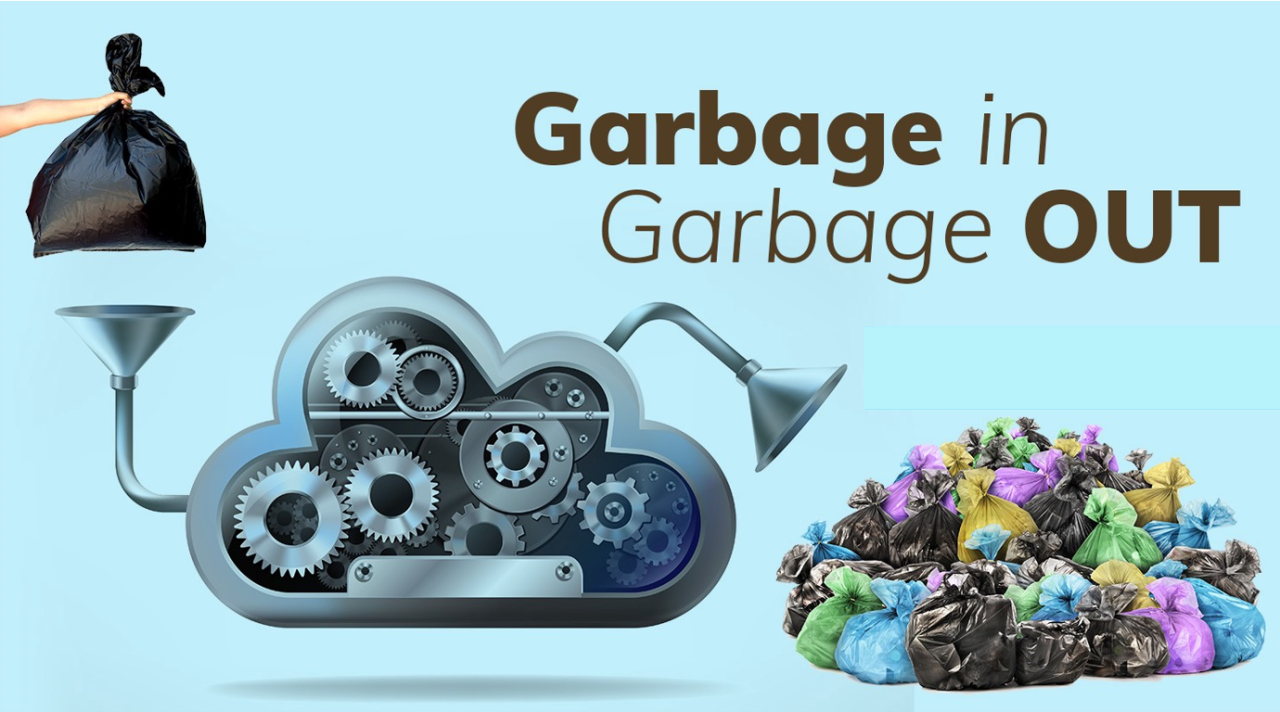
Let's make this concrete. Here are three prompts. All three are bad, for the same reason — but it gets less obvious each time.
Bad prompt 1:
Build me a rocketship. No mistakes."No mistakes" tells the model nothing. A rocketship for what? How big? What fuel? The output will be something — it's just not what you needed.
Bad prompt 2:
Build me a clone of amazon.com. No mistakes.More specific domain, same problem. It'll try. You'll get hundreds of lines of something. None of it will be right because you never said what "right" means.
Bad prompt 3 — this one looks reasonable. That's the trap:
Help me solve the problem of rental scams in NYC for first-time renters. Give me the research, the data, the stakeholders, and a problem statement.This sounds like a research prompt. It isn't. You handed it the entire project at once. What comes back will be long, generic, and full of statistics you can't verify. You won't know what to do with it.
The problem is never the words. It's the size of the ask.
How We Got Here
Six years that changed everything:
- 2012 — AlexNet wins ImageNet by a landslide. A neural network beats classical computer vision so decisively that the entire field pivots overnight. The deep learning era begins.
- 2017 — Google researchers publish Attention Is All You Need. Nobody outside of ML research notices. It becomes the foundation everything below is built on.
- 2022 — ChatGPT launches. A million users in five days. For the first time, anyone can have a conversation with a model that sounds like it understands you.
- 2023 — GPT-4. The gap between "impressive party trick" and "actually useful for real work" closes fast.
- 2024 — Models start taking actions, not just answering. They browse, they write code, they call APIs. The word "agent" stops being jargon.
- 2025 — Claude Code, Cursor, Gemini inside Docs and Sheets. AI is no longer a chatbot you visit. It's inside the tools you already use, doing parts of the work.
The question stopped being "is AI real?" around 2023. The question now is "which parts of your workflow does it own, and which parts do you?" That's what this program is actually about.
How It Works (The Short Version)
Before you ever type a message, the model read an enormous amount of text — books, articles, code, conversations, websites. What's left isn't memory or understanding. It's a massive set of patterns: given this sequence of words, what word is most likely to come next?
When you type something, it doesn't think, look anything up, or reason through a problem. It predicts the next token. Then the next. Then the next — until it has a full response.
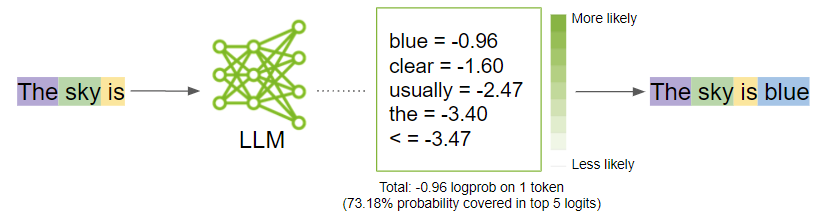
This is why confident and correct are two completely different things. The NYC chatbot this morning didn't lie about tip law. It predicted the most confident-sounding answer. Nobody — not the model, not the city — checked whether "likely" meant "true."
This is also why what you put in determines everything about what comes out.
The Fix: One Step at a Time
Same goal as Bad Prompt 3 — understand the rental scam problem well enough to write one clear problem statement. But broken into steps where each output feeds the next.
Step 1 — Map who's actually involved
Who are the real people affected by rental listing scams? List them by role — not broad categories, specific humans. For example: a 19-year-old moving out for the first time, a landlord whose real listing gets copied by a scammer, a property manager fielding fraud complaints from applicants.Step 2 — Find who's most exposed
Of the people you listed, who faces the most immediate financial harm and has the least protection or recourse after it happens? Pick one and make the case.Step 3 — Get to the specific failure moment
I'm focusing on a first-time renter, 18-22 years old, searching on Craigslist or Facebook Marketplace. Describe the exact moment in that process where a scam listing is hardest to distinguish from a real one. What does the listing look like? What does the scammer do next? Be specific.Step 4 — Ground it in real data
I need one real, verifiable statistic about how common or costly rental listing scams are — specifically for people aged 18-29. The FTC publishes consumer fraud data at ftc.gov/exploredata. Point me to the right dataset and tell me what number to look for.When you finish Step 4 you have: a specific person, a specific moment of failure, and a real number that proves it's not an edge case. That's the problem statement sentence. Run the same logic on your domain.
The Four Tools
Quick orientation. Each one has a different job.
Google Gemini
General-purpose AI assistant. Your main tool for research, brainstorming, and iterating. This is where you run your prompt sequences.
What it's good at: exploring a problem space fast, generating options, drafting and refining. What to watch: it will sound confident about things it's wrong about. Always check numbers against the actual source.
It can also generate images that make absolutely no sense — like Messi celebrating in a Croatia jersey while Luka Modric cries on the ground in an Argentina kit.

NotebookLM
AI that only talks about what you give it. You upload sources — an article, a report, a dataset description — and it answers questions based only on those. No open internet, no hallucinations from elsewhere.
Use it today: take one background article from your domain's task doc and upload it. Ask: "Who is most affected by this problem and what does it actually cost them?" Compare what it says to what Gemini said about the same domain.
Google AI Studio
Where you'll build your prototype in Week 2. You write a system prompt that defines how an AI should behave, then test it with real inputs. Today is a first look — we're coming back on Day 5.
Gemini in Google Workspace
Gemini built into Docs and Sheets. Useful for drafting and cleaning up your problem statement, organizing research notes, or turning a messy Gemini output into something structured. Available inside any Google Doc via the side panel.
Your Turn
Round 1 — Run the sequence
Open Gemini. Use the prompt sequence for your domain (tabs below). Run Steps 1 and 2. Don't edit the output — just read it and note one thing it assumed that you didn't say.
Share out
One or two teams put their prompt on screen. Class looks at it together:
- What did Gemini assume you didn't actually say?
- Is the output specific enough that two teams would get different answers for different domains?
- What one thing would you add to make Step 1 more precise?
Revision
Rewrite your Step 1 based on what just came up. Run it again. Put the two outputs side by side.
The output improved not because you found better words — because you gave it a more specific task.
NotebookLM
While one person runs the revision in Gemini, have another team member open NotebookLM and upload one article from your domain's reading list. Ask it the same Step 1 question. Compare what it says to what Gemini said.
Adversarial round
Now make Gemini disagree with itself. Take your revised Step 1 output and run this prompt:
Why might this NOT actually be a widespread problem? Make the strongest case you can that the pain point my team identified is overstated, rare, or already solved.Read what it says. If it finds a real hole in your framing, fix it. If it's grasping — that's useful too. It means your problem statement is solid. Either way, you've stress-tested it before committing to it.
This is the lesson: AI isn't an oracle. It's responsive to framing. The same tool that validated your problem can poke holes in it. That's a feature, not a bug.
End of day
Each team presents a 2-minute debrief to the class — no slides. Three things: what's your pain point, why does it matter, and what's one real fact that backs it up. Use what you found today.
One Sentence
Before the end of today, your team should have a draft of this sentence:
[Who] struggles to [what], which causes [consequence], shown by [data point].
It doesn't have to be perfect. It needs to be specific. If it could describe any city, any person, or any problem, it's still too vague.
Prompt Sequences
Same four-step logic for each domain. Steps 3 and 4 are specific to the domain — don't swap them.